
Elastic Band
Why Choose Us
MARKET
Our products are mainly exported to Europe, America, Japan and South Korea. We have also reached long-term cooperation strategies with some well-known companies around the world, hoping to further expand the market and establish friendly cooperation with other countries.
CERTIFICATES
ISO 9001, RoHS, REACH and other certificates.
BUSINESS
Various types of webbing such as webbing, jacquard webbing, nylon loop straps, special aramid ropes, aramid webbing, elastic bands, pet straps.
SERVICE
"Customer first, service first", we sincerely look forward to establishing constructive cooperation with you and establishing long-term business relations with you.
Elastic bands, also commonly known as rubber bands, are small, looped bands made from natural or synthetic rubber. Their primary characteristic is their elasticity, which allows them to stretch and return to their original shape without permanent deformation. Elastic bands come in various sizes, colors, and thicknesses, and they are widely used for a multitude of purposes.
-
![Jacquard Elastic Band]() Jacquard Elastic BandJacquard elastic bands are mainly used for high-end handbags, belts, shoes and hats, lanyards, gift decorations, luggage straps, etc. In addition, jacquard elastic bands are also used in clothing...read more
Jacquard Elastic BandJacquard elastic bands are mainly used for high-end handbags, belts, shoes and hats, lanyards, gift decorations, luggage straps, etc. In addition, jacquard elastic bands are also used in clothing...read more -
![Stretch Mesh Elastic Band]() Stretch Mesh Elastic BandWe are committed to providing our customers with factory prices, OEM/ODM customization, 100% product inspection, timely delivery, and excellent after-sales service. "Customer first, service first"...read more
Stretch Mesh Elastic BandWe are committed to providing our customers with factory prices, OEM/ODM customization, 100% product inspection, timely delivery, and excellent after-sales service. "Customer first, service first"...read more -
![Solid Color Elastic Bands for Clothing]() Solid Color Elastic Bands for ClothingAt Gaohong Ribbon, we adhere to the highest standards of quality, efficiency, and reliability. Our products are of the highest quality and made with care and precision. We believe that our hard...read more
Solid Color Elastic Bands for ClothingAt Gaohong Ribbon, we adhere to the highest standards of quality, efficiency, and reliability. Our products are of the highest quality and made with care and precision. We believe that our hard...read more -
![Jacquard Stretch Elastic for Band]() Jacquard Stretch Elastic for BandWe invite you to join us in our pursuit of excellence. Let us work together to create a brighter future!read more
Jacquard Stretch Elastic for BandWe invite you to join us in our pursuit of excellence. Let us work together to create a brighter future!read more -
![Thick Stretch Mesh Elastic Band]() Thick Stretch Mesh Elastic BandOur woven straps go through a complete production line, beginning with the twisting of high-quality yarn, moving on to the weaving of the rope straps, then the weaving of the cloth materials, and...read more
Thick Stretch Mesh Elastic BandOur woven straps go through a complete production line, beginning with the twisting of high-quality yarn, moving on to the weaving of the rope straps, then the weaving of the cloth materials, and...read more -
![Jacquard Elastic Band]() Jacquard Elastic BandOur manufacturing process is efficient and reliable, allowing us to provide customers with high-quality woven straps that are perfect for a wide range of applications. From simple household uses...read more
Jacquard Elastic BandOur manufacturing process is efficient and reliable, allowing us to provide customers with high-quality woven straps that are perfect for a wide range of applications. From simple household uses...read more


Woven Elastic Band
Woven Elastic Band is using natural or man-made fibers (usually cotton or polyester) as warp and weft threads, and interweave with rubber (natural latex or synthetic rubber). Woven elastic band is the tightest of the three types of elastic band. It is widely used on many products, such as the cuffs and hem of clothing, the waist of trousers (such as jacquard elastics), suspenders, etc. Woven elastic band can also be used in sports.
Knitted Elastic Band
Knitted elastic bands are made by hooking the warp and weft threads together, and the rubber threads are wrapped in the chain of warp threads (or sandwiched by two sets of weft threads). The organization of knitted elastic band is looser than that of woven elastic band and braided elastic band, and the handfeel is the softest. Knitted elastic band can make small and colorful patterns, such as heathered drawstring headbands, multicolor elastic mesh elastics, and more. The mesh structure allows clear holes to be seen after stretching.
Braided Elastic Band
Braided elastic band, also known as spindle elastic band, is to cover the rubber thread after passing the longitudinal warp through the spindle (one of the parts on the spinning machine, used to wrap the yarn around the bobbin), and follow the Figure 8 braided into elastic. The texture and handfeel of braided elastic band are between woven and knitted elastic band. The disadvantage is that it’ll lose its ability to return to its original shape if being stitched or pierced. Braided elastic bands have fewer variations and are generally suitable for products that require narrower elastics, such as cuffs or necklines on apparel, or drawstrings at the hem.
Rubber Band
Rubber band can be made of natural rubber or synthetic rubber. When using it, you should pay attention to whether your customers are allergic to natural rubber. If they are allergic, it is recommended to use synthetic rubber to reduce the probability and reaction of allergies. Rubber band can be cut to specific width and thickness according to customer requirements, and are often used in tourniquets, yoga resistance band, cuff or waistbands of disposable protective coverall and other products that require high strength and elasticity. Rubber band has good elasticity, but because it is not covered with yarn, it is not comfortable to directly touch the skin. And the appearance is not good, so it is not suitable for direct sewing on apparel.
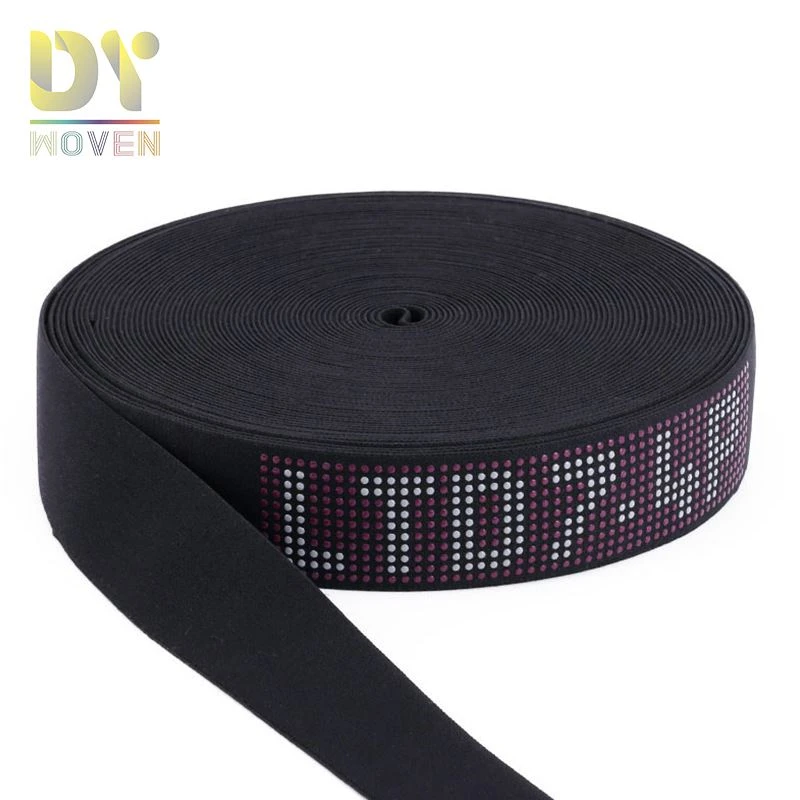
Elastic band stretch rate (Elongation)
Elongation rate refers to the elasticity of the elastic band itself, that is, the maximum stretchable length. If the stretch rate is not large enough, the elastic band is difficult to adjust and spread, which will make it too tight or uncomfortable to wear. The stretch rate can be adjusted according to the needs of customers.
Elastic band rebound rate
Rebound rate refers to the resilience of the elastic band, that is, the ability to return to a certain range of its original length after being stretched by an external force for a period of time. If the rebound rate is too large, the elastic band will become looser and looser, which will make it unable to achieve its due function. The rebound rate can be adjusted according to the needs of customers.
How To Care For Sewing Elastic Band
Machine Washing
If the garment is machine washable, use a gentle cycle with cold water. Place the garment in a mesh laundry bag to protect the elastic.
01
Temperature
Avoid using hot water, which can damage elastic fibres over time. Cold or lukewarm water is generally safer for both fabric and elastic.
02
Drying
Air-dry the garment whenever possible. Hanging it to dry or laying it flat helps preserve the elasticity of the material. Avoid using a clothes dryer, especially on high heat, as it can cause the elastic to degrade.
03
Ironing
If ironing is necessary, use a low heat setting or place a pressing cloth between the iron and the elastic to prevent direct contact.
04
Lifespan
The lifespan of elastic can vary depending on factors such as the quality of the elastic, frequency of use, and storage conditions. Generally, elastic has a shelf life, and it may lose its elasticity and resilience over time. Exposure to sunlight, heat, and humidity can also impact its longevity.
05
First,Raw Material Selection
The first step in making the elastic band is picking the right raw materials. Common raw materials include cellulose, polyester, nylon, spandex and so on.
● Cellulose: Soft and comfortable, breathable and so on, suitable for products that need good touch and breathability.
● Polyester: High strength and durability, ideal for making high-strength elastic bands.
● Nylon: Equally strong and abrasion-resistant, suitable for applications that require greater tensile strength and friction.
● Spandex: Known for its excellent resilience, spandex is the material of choice for making highly resilient elasticized belts.
Manufacturers will choose the most suitable raw materials according to the specific needs of the product and the different requirements of users.
Second, the production process
Tape making is the core process of elastic band production. According to the different raw materials, elastic band manufacturers will adopt different processing techniques:
● Pre-treatment: Raw materials are required to use twisted wire and webbing to become the first elastic band ribbon. Some special materials, such as thermoplastic polyurethane, also require drying to ensure the durability and effort of the material.
● Knitting or weaving: According to the design requirements, the treated raw materials are knitted or woven through knitting or weaving machines. Knitted elastic belts are woven using the warp knit lining method, while woven elastic belts are made by weaving spindles around rubber filaments in a specific path.
● Covering or clamping: During the knitting or weaving process, the rubber yarns are covered by a braided chain or clamped by two sets of weft threads to increase the elasticity and durability of the elastic band.
Third,Dyeing process
Dyeing is another important part of making elastic bands. Elastic band design manufacturer will choose the appropriate colour and colour process to colour the elastic belts according to the production demand and user needs. During the explanation process, parameters such as temperature, time and concentration of colours need to be controlled precisely to determine the uniform effect of explanation and high colour speed. Meanwhile, for the protection of the environment and human health, the elastic band thin manufacturer must choose colors that are not dangerous to the environment and are not dangerous to the environment.
Four, post-treatment and processing
After dyeing, the elastic band needs to undergo a series of post-treatment and processing procedures to form the final product:
● Cutting: The long elastic bands are cut according to the set length.
● Flattening: Flatten the surface of the elastic band by ironing at high temperature to make it easy for subsequent processing and use.
● Embossing: According to the need, various patterns and designs are embossed on the surface of the elastic band to increase the beauty and practicality.
● Inspection: Strict quality inspection of finished elastic belts to ensure that all indicators meet the standard requirements, to avoid the inflow of inferior products into the market.
The elastic material is composed of rubber, polyester, glue and elastic fiber. Commonly used synthetic rubber: cis-1,4-polyisoprene rubber dao (abbreviated as isoprene rubber) cis-1,4-polybutadiene rubber (abbreviated as cis-butadiene rubber).
According to different weaving methods, it can be divided into woven elastic band, knitted elastic band and woven elastic band.
The woven elastic band is made of cotton or chemical fiber as warp and weft yarns, and a set of rubber yarns (latex yarns or spandex yarns) are interwoven according to a certain rule.
The knitted elastic band is woven by the warp-knitted weft inserting method. Under the action of a crochet or latch needle, the warp thread is tacked into a braided chain, the weft thread is lined in each braided chain, and the scattered braided chains are connected into a belt. The rubber thread is covered by the braided chain, or by two sets of weft threads. Clamping. Knitted elastic bands can be woven into various small patterns, colored stripes and crescent edges. The texture is loose and soft. Most of the raw materials are nylon stretch yarn. The products are mostly used for women's bras and underwear.
Woven elastic band is also called ingot woven elastic band. The warp thread is woven around the rubber wire through a spindle in a "8"-shaped track. The belt body has a herringbone shape, with a width of 0.3 to 2 cm. The texture is between woven and knitted elastic bands. The variety of patterns is relatively monotonous and is mostly used for clothing.
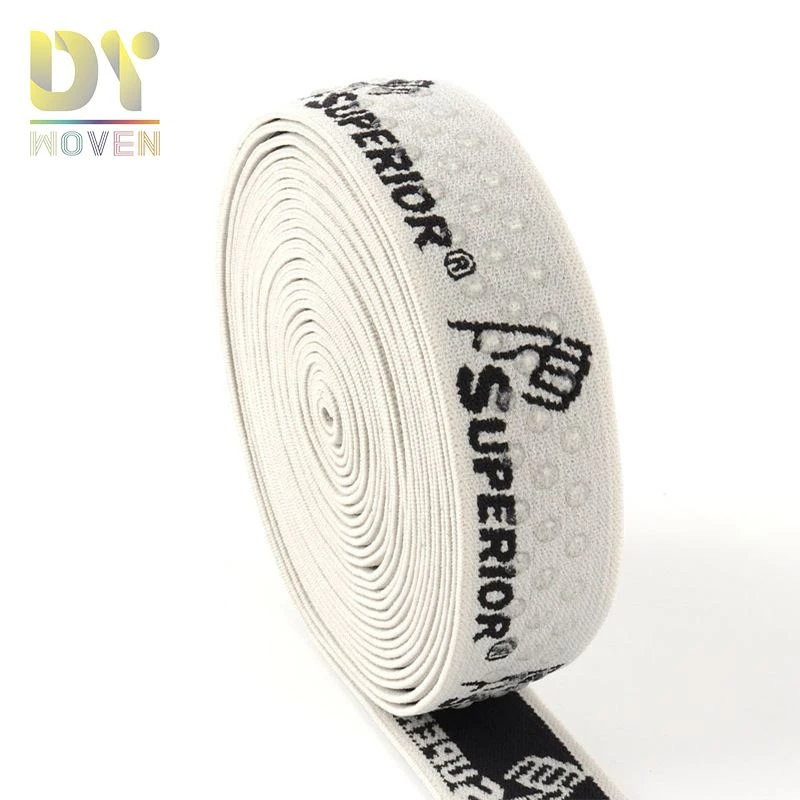
Elastic bands are widely used in various industries including fashion, sportswear, medical, and more. They are highly flexible and stretchable, ensuring a snug fit that makes them essential in many product designs.
There is a wide range of fabric elastic bands available in the market, each with specific properties that make them suitable for different purposes. In this article, we will discuss the most common types of fabric elastic bands used for different applications.
Woven Elastic Bands
Woven elastic bands are made by weaving rubber threads into a fiber. They are known for their strength and durability, making them a popular choice for heavy-duty and high-stress applications. These elastic bands can stretch up to twice their original length and then return to their original shape. They are available in various widths and thicknesses, making them suitable for different applications such as sportswear, belts, and bags.
Knit Elastic Bands
Knit elastic bands are made by knitting together strands of rubber and fiber. They are softer and more pliable than woven elastic bands and are often used in apparel and lingerie applications. They can stretch up to 50-60% of their original length and are available in various widths.
Braided Elastic Bands
Braided elastic bands are made by braiding rubber threads with a blend of polyester and cotton fibers. They are known for their strong elasticity, making them suitable for many medical applications. Braided elastic bands are also used in waistbands, sleeves, and cuffs. They can stretch up to 2-3 times their original length and are available in various widths and thicknesses.
Our Factory
Our factory is mainly engaged in the production and wholesale of various types of webbing such as webbing, jacquard webbing, nylon loop straps, special aramid ropes, aramid webbing, elastic bands, pet straps, fireproof wires, flame retardant wires, etc. We have an experienced and professional R&D team, any of your ideas can be realized here. What we can provide is: ex-factory price, OEM/ODM customization, 100% product inspection, timely delivery and after-sales service.

FAQ
We're professional elastic band manufacturers and suppliers in China, specialized in providing high quality products with low price. We warmly welcome you to wholesale discount elastic band for sale here from our factory.
Solid Color Elastic Bands For Clothing, Jacquard Elastic Band, Jacquard Stretch Elastic For Band